


 35 / 156

Investing in sub-Saharan Africa
Rapid urbanisation, population changes and global megatrends
such as industrialisation, technology and sustainable city
planning will drive growth in the real estate industry across
Africa over the next five years
(2)
. In almost all markets surveyed
in the PwC report, demand for quality retail, office and
industrial space is outstripping supply as international and
local occupiers capitalise on economic opportunities. The
report identified key growth drivers as:
Q
Africa’s young population is underpinning demand for
different types of real estate
Q
Industrialisation will be accompanied by rapid growth in
the retail sector
Q
Exports of natural resources and agriculture will remain key
sources of economic growth, in tandem with increased risk
for certain countries
Q
Infrastructure shortages will create opportunities for
investment
Q
Government policy and legislation will influence the
decision to invest, while local partnerships will become
increasingly important
Q
Continued progress in pension fund, stock exchange and
banking regimes will facilitate investment, and a broader
range of investors will drive demand for real estate
investment opportunities
Q
Technology will impact business and building practices,
as well as consumer behaviour
Q
Sustainability will become entrenched in building design
and occupier requirements, with Africa’s most ambitious
countries changing city design and building practices.
0
1
2
3
4
5
6
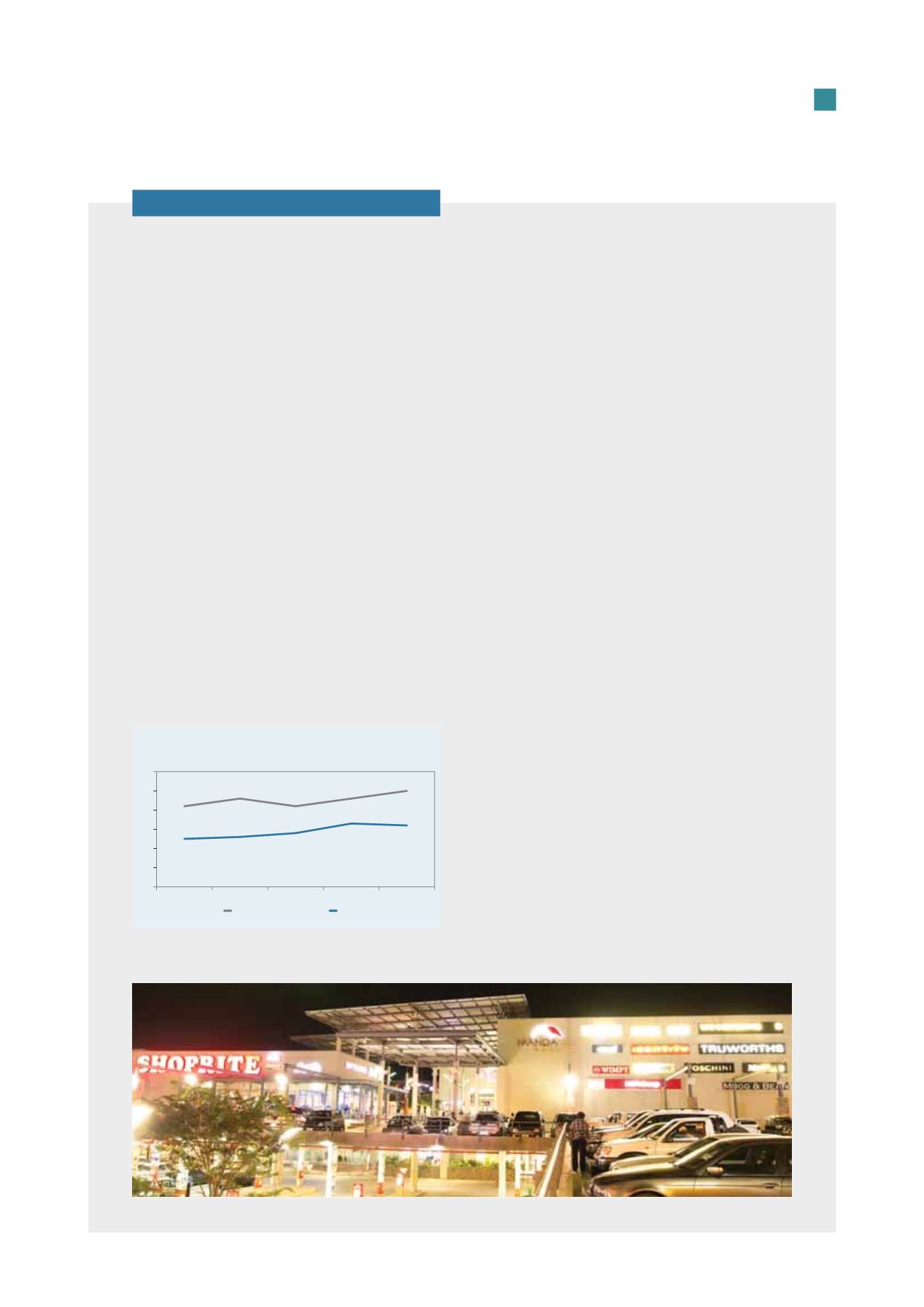
Real GDP growth (%)
2013
2014
2015f
2016f
2017f
Sub-Saharan Africa
World
Source: Global economic outlook: Sub-Saharan Africa regional
forecast, The World Bank
The weakening and volatility of African currencies is a risk to
the company, as it places local tenants under pressure, with a
consequent potential negative impact on income.
For REITs like Hyprop, a sustained economic growth rate of
around 5% for the continent means an expanding urban class,
with the propensity to spend.
Sub-Saharan Africa (excluding South Africa) still has a
significant shortage of quality retail property – around two
million square metres catering for over one billion people,
compared to South Africa with 23 million square metres for
55 million people. Rapid urbanisation also means metropolitan
populations are expanding at over 3% per annum, with some
cities, such as Accra where Hyprop has a presence, growing at
a rate well above that.
Compared to a decade ago, the metamorphosis across
African cities is notable – from an explosion in real estate
development to the new consumerism. And with a young,
urbanising population, all forecasts support the trend
continuing.
Manda Hill Shopping Mall, Zambia
33
Hyprop Investments Limited
Integrated Report 2015