
Chairman's report
We live in an increasingly unpredictable environment with material shocks to
international economies, and the local economy,
becoming more regular.

We will work hard to ensure our properties remain as destinations of choice for the South African shopper and environments in which our retailers can achieve their targeted growth levels.

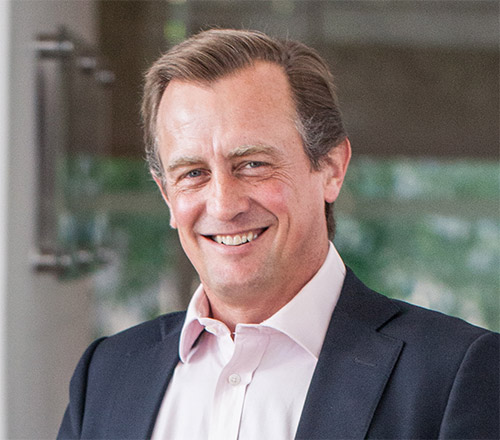 Gavin Tipper, chairman
We will work hard to ensure our properties remain as destinations of choice for the South African shopper and environments in which our retailers can achieve their targeted growth levels.
An important aspect of the Brexit vote was that it was a strong call for change. Donald Trump may not be elected but the strength of his following again reflects the large number of people who are disaffected with the establishment and want change. A number of economies in the European Union have not recovered to pre-2008 levels despite significant financial stimulus, and sections of their populations are calling for change; whether or not there is change will depend on the levels of discontent and the leadership available to rally the calls.
Change at these levels is significant, particularly in a global economy still on the fragile side of normal, and as change becomes more likely, the associated uncertainty affects currencies and stock markets. A further consequence of major global changes, or likely changes, may be longer-term economic weakness, or anticipated weakness, which may require more financial stimulus and lower rates for longer. All of this increases investment risk but also creates opportunities.
The decrease in commodity and oil prices has had a detrimental effect on the economies of a number of African countries. Exchange rates have declined, or been adjusted downwards, and the supply of hard currency has been constrained. Without a sustained improvement in oil and commodity prices, economic growth in these countries will require responsible fiscal and monetary policies, and steps by governments to reduce inefficiency and corruption.
The South African economy continues to disappoint. The lack of leadership and repeated, unnecessary own goals have resulted in growth rates that are far too low to provide employment to an expanding and, in many cases badly educated, workforce. Although there are elements in government that seem to appreciate the magnitude of the crises we face, often their efforts are eclipsed by the actions of a group that seems to have agendas contrary to the best interests of the country, the unemployed and the poor. The results of the recent municipal elections should provide a call to government for change, however it appears that the primary responses will be largely populist and will ignore the fundamental issues South Africa faces. As such, the medium-term prognosis for the country is concerning; it is difficult to see how a ratings downgrade in the next year will be avoided, how the flight of intellectual and financial capital will be arrested and how the remaining tax base will afford the ever-increasing burden being placed on it.
The performance of the local listed property sector has reflected the consequences of government’s economic policy over an extended period and investors’ reactions to that. Property as an asset class has outperformed many other asset classes more directly affected by government policy or more dependent on labour, and there has been strong demand for property shares that offer exposure to markets other than South Africa.
Some of the expected consolidation in the property sector occurred during the last year and there have been several capital raisings and new listings, certain of which offer an exposure to offshore property.
Hyprop’s domestic portfolio performed well in the 12 months to 30 June 2016. A number of developments to our properties were completed and demand for space remains strong, with rental growth and contractual escalations on new lettings and renewals reflecting the high quality of the malls. Vacancies decreased other than where space has been earmarked for redevelopment. A limited number of retailers went into business rescue during the year and this space was either relet or the tenant exited the business rescue process. The portfolio is reviewed regularly and contingency plans exist where there is considered to be a meaningful risk of tenants defaulting or wanting to relinquish space. Vacancies in the office portfolio decreased with new lettings at satisfactory rental levels.
We continue to look for opportunities to add to our domestic portfolio. The market for the type of properties appropriate to Hyprop is, however, limited and those properties tend to be expensive when they become available. Where commercially justified we will develop or extend our existing malls but this is done carefully in the context of the oversupply of retail space in South Africa and an economy producing little or no growth.
We disposed of a number of non-core properties during the year and applied the proceeds to reducing debt. We will target the remaining non-core properties in the next financial year.
The African portfolio performed reasonably well in country, despite the economic turmoil in certain of the countries in which we own properties. Demand for space held up and rental growth was acceptable. We have put a number of the proposed developments on hold until there is more clarity on progress in stabilising and growing the underlying economies. We experienced some difficulty in obtaining hard currency in Nigeria and Zambia, but eventually succeeded and anticipate an improvement in the level of access to hard currency, particularly in Nigeria.
The malls in Belgrade and Montenegro have performed in line with expectations since we acquired ownership. Opportunities for yield improvements have been identified and a proposal for an extension to the Montenegro mall is being considered.
Hyprop produced a strong financial performance for the year, with the distribution for the second half increasing by 14,9% over the comparable period in 2015, and the annual distribution rising by 14,2%.
The like-for-like South African results were up by 7,3% in line with expectations for our portfolio, with the overall result benefiting from a full year of income from the Rosebank Mall, higher income from the African portfolio due to the West Hills, Achimota and Ikeja properties, the inclusion of income from the Montenegrin mall from February 2016, and from the Belgrade mall from April 2016, and a reduction in interest costs due to the application of the proceeds of the sale of non-core assets to reducing debt.
The level of foreign shareholding in the company remained relatively constant over the prior year.
In July 2016 the company raised R700 million by way of a private placement. The funds will be used to reduce debt and strengthen the balance sheet in anticipation of further offshore acquisitions.
Outlook
The strength of the rand and the local stock market are heavily influenced by both international developments and local political leadership issues. The election of an unfortunate presidential candidate in the US, a failure to sensibly resolve the Brexit issues, significant political disruption in Europe or a decision by the US Federal Reserve to raise interest rates are likely to disrupt our markets and affect the relative value of the rand, as are local actions that cast doubt on the key tenets of our governance systems.
The ongoing failure to produce meaningful economic growth locally and the impact of that on the average South African are significant contributors to a concerning economic outlook.
We will work hard to ensure our properties remain as destinations of choice for the South African shopper and environments in which our retailers can achieve their targeted growth levels. We will invest in our properties to maintain their standard, and where appropriate, to expand or enhance the offerings. The disposal of non-core properties will continue.
The performance of the African portfolio will depend on developments in the countries in which we own properties. Local demand appears to be holding up and access to hard currency is improving. New developments will remain on hold until we are more confident of future growth.
We will work to optimise the European properties and will undertake the expansion in Montenegro if it meets our investment criteria. We will continue to evaluate other properties in South-Eastern Europe with the objective of adding to our portfolio.
Certain South African property shares have performed strongly during the last 12 months and a level of caution looking forward is appropriate. The Hyprop portfolio is, however, well structured and relatively resilient, and should produce satisfactory returns over the medium term.
Sustainability
We recognise the importance of a sustainable business and of sustainability in the different facets of our business.
Our commitment to being a good corporate citizen pervades our approach to business and we endeavour to act in a responsible, balanced and commercially sensible manner. As such, we ensure that our business model is sustainable and that it remains relevant to the economies we operate in.
We are conscious of our impact on the environment and have been measuring and mitigating that impact for a number of years. We have made meaningful progress and our process has become increasingly sophisticated, with demanding goals and tight accountability for outcomes.
Transformation is a priority for successful South African businesses. Hyprop has demonstrated regular improvement in this area and while our rating will be affected by the new codes and their impact on the property charter, we will continue to implement initiatives that yield sensible and sustainable outcomes.
Corporate governance
Hyprop is committed to the highest standards of corporate governance. This integrated annual report sets out details of our governance structures and the extent to which we comply with relevant codes of corporate governance and regulatory requirements.
Board changes
Louis van der Watt resigned from the board on 4 May 2016. On behalf of the board I thank him for his contribution and wish him well in his future endeavours.
Appreciation
On behalf of the board, I thank our executives, management and staff for their efforts during the year. I also thank our stakeholders for their support, and my fellow board members for their contributions.
Gavin Tipper
Chairman